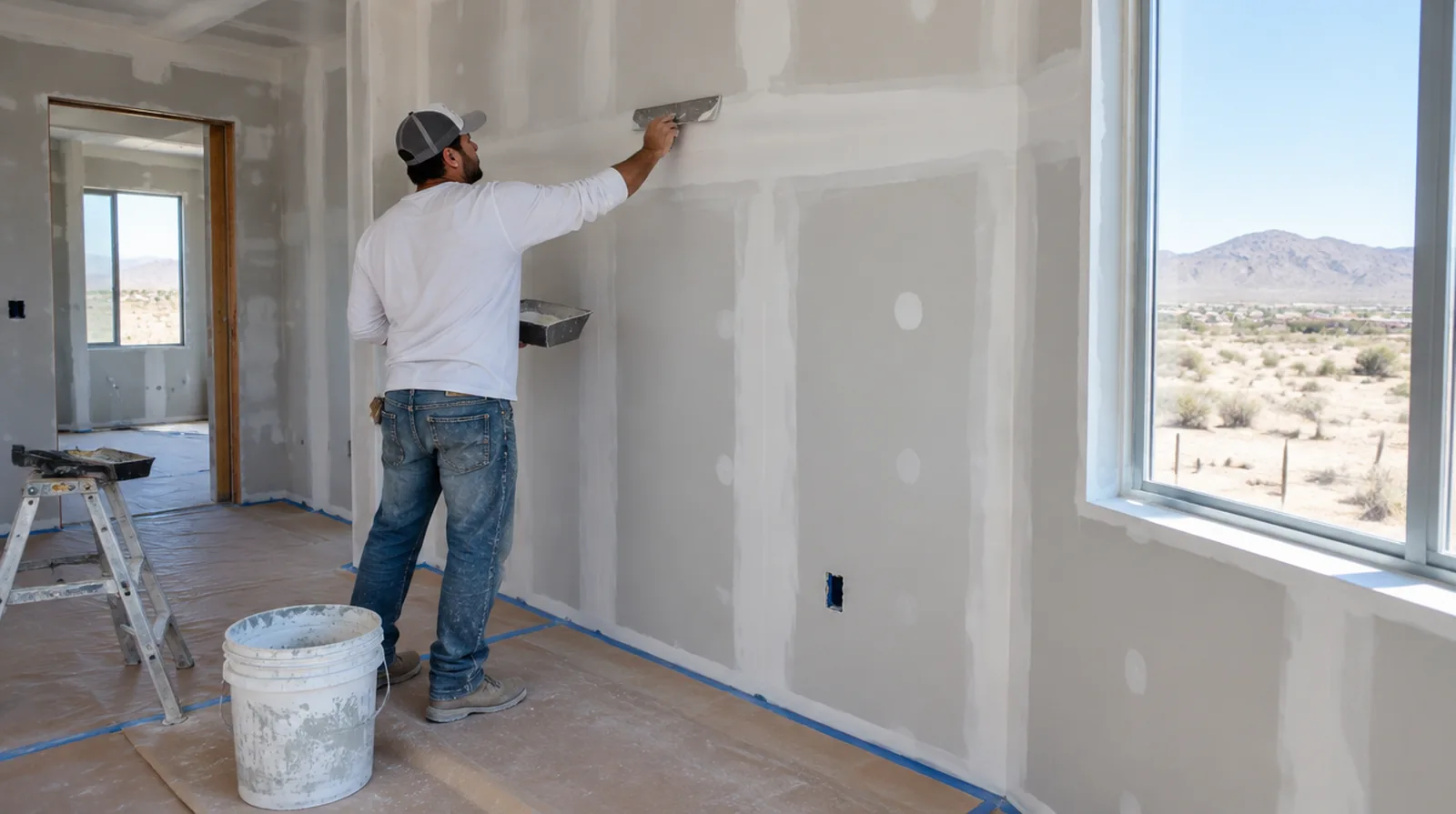
Desert sun and big temperature swings
At roughly three thousand feet, Hesperia sees hot afternoons and cold nights, sometimes with a spread of thirty degrees inside a single day. Rooms that face west soak up heat while an evaporative cooler or air conditioner pulls the other way, and that cycle can open taped seams over a window header. Compound dries fast in the arid air, so thin coats, damp sponging and a little patience help keep a repair from shrinking or cracking at the edges.
Wind, dust and keeping a room clean
Santa Ana style winds and spring gusts push fine desert grit through any gap around doors and windows. During sanding, that same grit can end up embedded in a fresh coat if the room is left open. Plan to close the space, cover returns and keep the garage door down while finishing is underway. A clean room between coats does more for the final appearance than any special product, especially on a smooth wall that catches low sunlight.
High Desert homes in Hesperia
Most of Hesperia was built out from the 1980s onward on large lots between Interstate 15 and the Mojave River, so tract houses, custom homes on an acre and manufactured homes can all share a single road. Walls are usually sprayed with a light knockdown or orange peel texture, and many homes still carry their original builder finish. A patch in one of these rooms has to match a texture that may have been applied thirty years ago with a different hopper and compound.
Points to settle first
When a paint contractor follows the drywall work, define the surface condition being handed over and decide who handles any minor final touch ups.
For work spread across different planes, record their dimensions separately and describe the boundary of the treatment on each surface.
Measure the complete assembly
Board quantities depend on wall height, ceiling coverage, openings and the proposed orientation of the sheets. Planning the sheet arrangement can avoid thin strips and poorly positioned joints beside openings.
Add reliable backing
Support a ceiling replacement mechanically at its perimeter instead of using finishing compound as a structural attachment. Matching the thickness of the board helps avoid a visible step between old and new surfaces.
Choose the patch boundary
Loose paper and crumbling gypsum must be removed until the surrounding panel can support a durable repair. A tidy rectangular cut often provides stronger backing than following an irregular broken edge.
Coordinate with the painter
Primer can reveal small imperfections that were demanding to see on the raw white surface. Decide beforehand who handles minor touch ups and whether a post primer review is included.
Control application conditions
Compound consistency and application distance affect how a sprayed pattern lands on the wall surface. Room conditions and drying rate also influence when a knockdown pass ought to be made.
Keep contamination separate
Suspected microbial contamination or exposure to flood water is outside a routine cosmetic patch assessment. Obtain suitable remediation advice about safe containment and removal before arranging ordinary drywall restoration.
About the illustrations
The website images are generated examples of drywall interiors and methods, not photographs of completed customer work. No customer reviews or qualifications are implied. The project form and the telephone shown on this page connect you with the next project conversation.
Explore the drywall services or view the address and map.
More planning details for Hesperia
Manufactured homes in the area may use thinner wall panels that call for a different repair method than standard board. Wide Hesperia lots normally leave plenty of room to stage sheets, provided they stay flat and out of direct sun. Afternoon light across a smooth wall reveals ridges that are hard to see at noon, so review the finish later in the day.