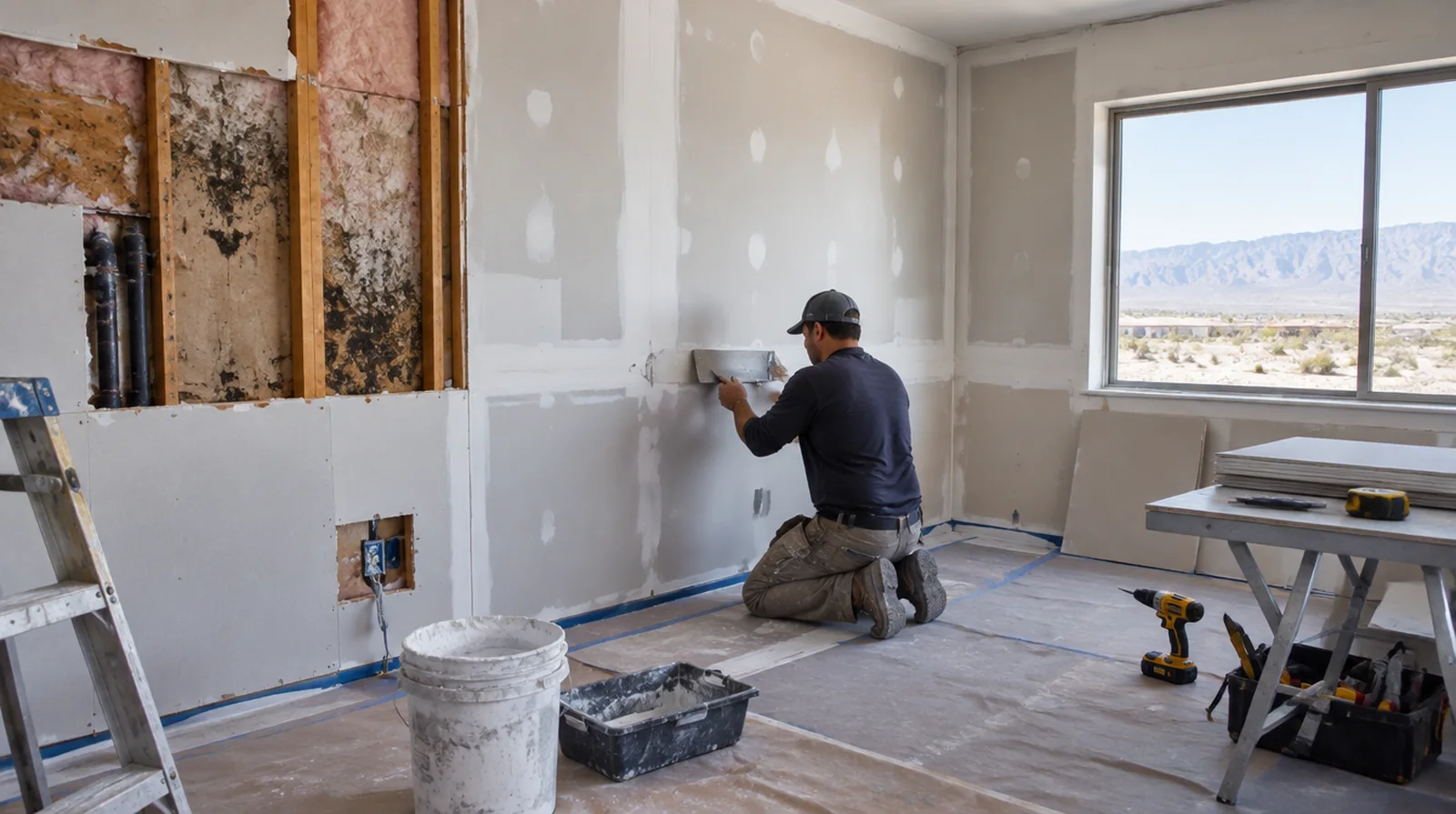
Rebuild supported edges
The new board section must connect firmly to suitable backing or sound framing. Stable edges reduce avoidable stress at the boundary between the retained face and the replacement. For work spread across differing planes, record their dimensions separately and describe the boundary of the treatment on each surface.
Treat remaining discoloration
An old dry mark may bleed through new decoration unless an appropriate primer is selected. Verify that the stain is inactive before choosing a coating system for the repaired surface. Where the wall surface meets fixed furniture, clarify whether removal is included or whether the finish will terminate at the accessible edge.
Inspect concealed components
Other components revealed by removal could need attention that is not included in panel replacement. Those decisions should be resolved before the drywall portion of the repair moves forward. For a planned new wall mounted fixture, resolve its backing requirements while the cavity remains open instead of cutting into completed drywall later.
Define selective removal
Removing a controlled section provides access for assessment while preserving material that remains sound. The cut boundary also needs to accommodate backing and a workable finishing transition. For walls beside bright windows, review a dry sample from an oblique angle as well as looking straight at the repaired surface.
Keep contamination separate
Suspected microbial contamination or exposure to flood water is outside a routine cosmetic patch assessment. Ask an appropriate remediation professional about containment and material handling before drywall work is scheduled. If the wall work belongs to a broader renovation, coordinate its order with flooring, cabinetry and trim instead of scheduling finishing in isolation.
Agree on decorative boundaries
Restoring the gypsum and achieving a consistent painted room finish are not automatically the same scope. A ceiling or wall repaint may have to extend beyond the removed section to look consistent. If the ceiling or wall includes fittings, identify the person responsible for removing and reinstalling each item before the work begins.
Record the completed scope
Retain useful information about source repairs, material replacement and any drying checks performed by other trades. That documentation distinguishes the completed drywall scope from continuing upkeep and responsibilities elsewhere in the property. If access passes through a shared space, arrange protection and a delivery route that do not unnecessarily obstruct other occupants.
Assess material condition
Staining, swelling, softened edges and loose paper help determine which panels may need removal. The noticeable mark does not always show the full extent of the affected cavity. When reviewing the finished work, use the agreed lighting and natural room viewpoints so the assessment reflects the intended use of the space.
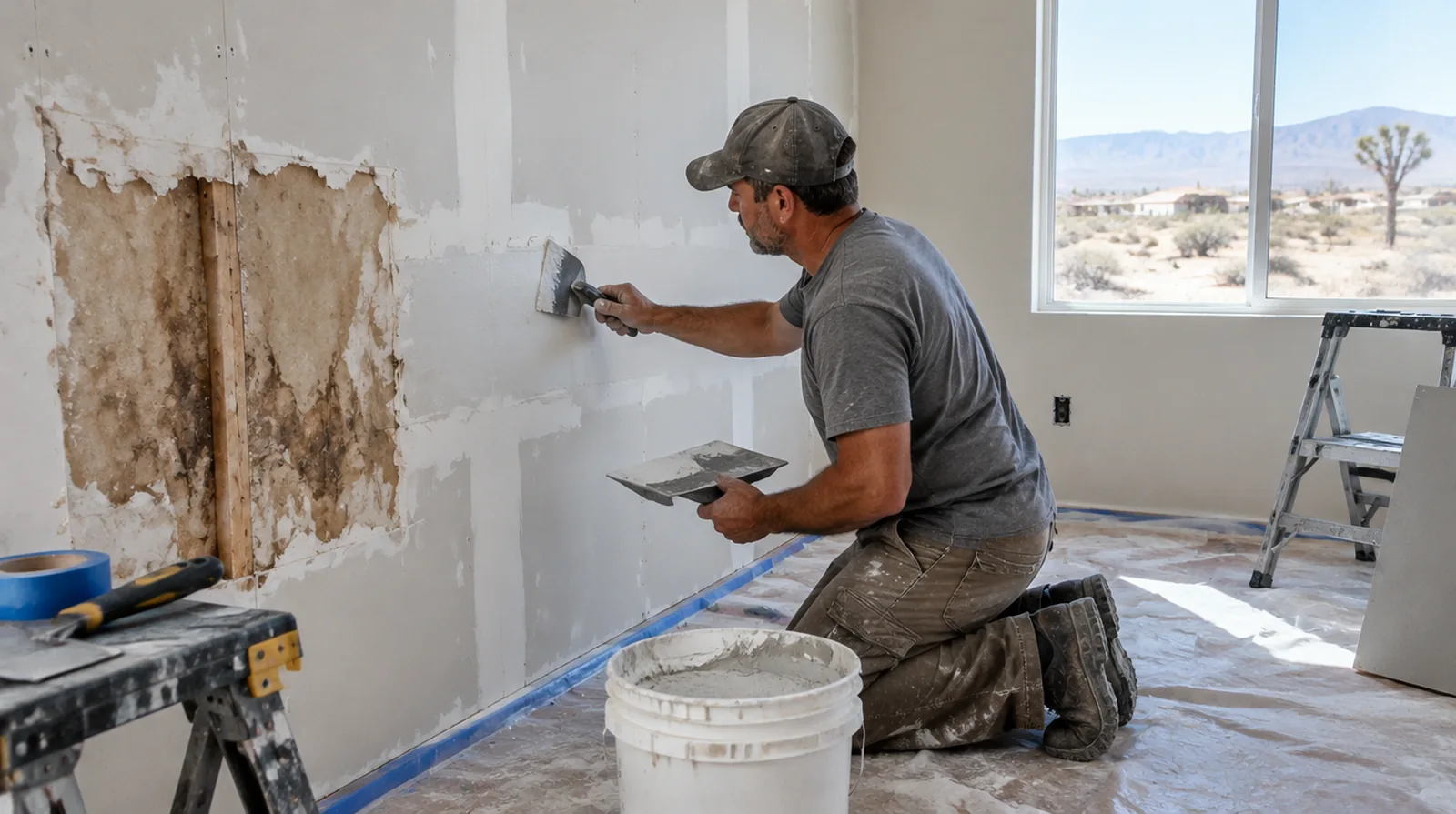
Resolve the water source
A leak or condensation problem must be addressed before replacing the affected drywall. Surface repairs alone cannot prevent damage from returning when water is still reaching the assembly. If the interior will remain occupied, identify a practical separation between the project space and the space that still needs daily access.
Verify drying readiness
A surface that feels dry can still conceal moisture in insulation or framing. The project should identify who verifies the cavity is ready before replacement panels close it again. For a distinctive existing pattern, retain a reference sample or detailed picture to make the matching discussion more specific.
Project context in Hesperia
Painting the whole wall after a texture patch gives a more even result than spotting primer over only the repair. Many Hesperia homes carry an original builder knockdown that needs a test patch before the full repair is textured.
Scope questions before finishing
If scheduling is the main concern, separate hands on labor from drying intervals instead of treating every visit as a full day of active work.
Where a neat final edge matters, agree whether the finish ends against existing trim or whether that trim will be removed and replaced.
If the completion date matters most, allow for intervals between coats as well as active labor rather than assuming the entire process happens continuously.
If a room has only limited ventilation, discuss how the finishing materials can dry without disrupting comfort or spreading dust elsewhere.
When painting is outside the proposal, describe the remaining decorative preparation clearly so another contractor can price that stage accurately.
At an edge beside built in furniture, state whether the obstruction will be removed or whether finishing stops at the section that can be reached.
For a repair that crosses several surfaces, measure the affected planes separately so the estimate can explain where each finishing treatment starts and stops.
Where several contractors share the renovation, identify the inspection and handover milestones that determine when each following stage can proceed.
If the wall work belongs to a broader renovation, coordinate its order with flooring, cabinetry and trim rather than scheduling finishing in isolation.
When more damage could be hidden, ask how any added scope will be documented before extra material is removed or replaced.
When a paint contractor follows the drywall work, define the surface condition being handed over and decide who handles any minor final touch ups.
For a planned new wall mounted fixture, resolve its backing requirements while the cavity remains open instead of cutting into completed drywall later.
Explore the Hesperia drywall overview for related options, or read the project planning information before arranging the next stage.
More planning details for Hesperia
Hesperia rooms that face west can heat quickly in the afternoon, so finishing coats are easier to manage early in the day. Fine desert dust settles on fresh compound, which is why closing windows and doors during sanding matters here. Dry High Desert air shortens drying time, so thin coats and light misting help prevent shrinkage cracks.