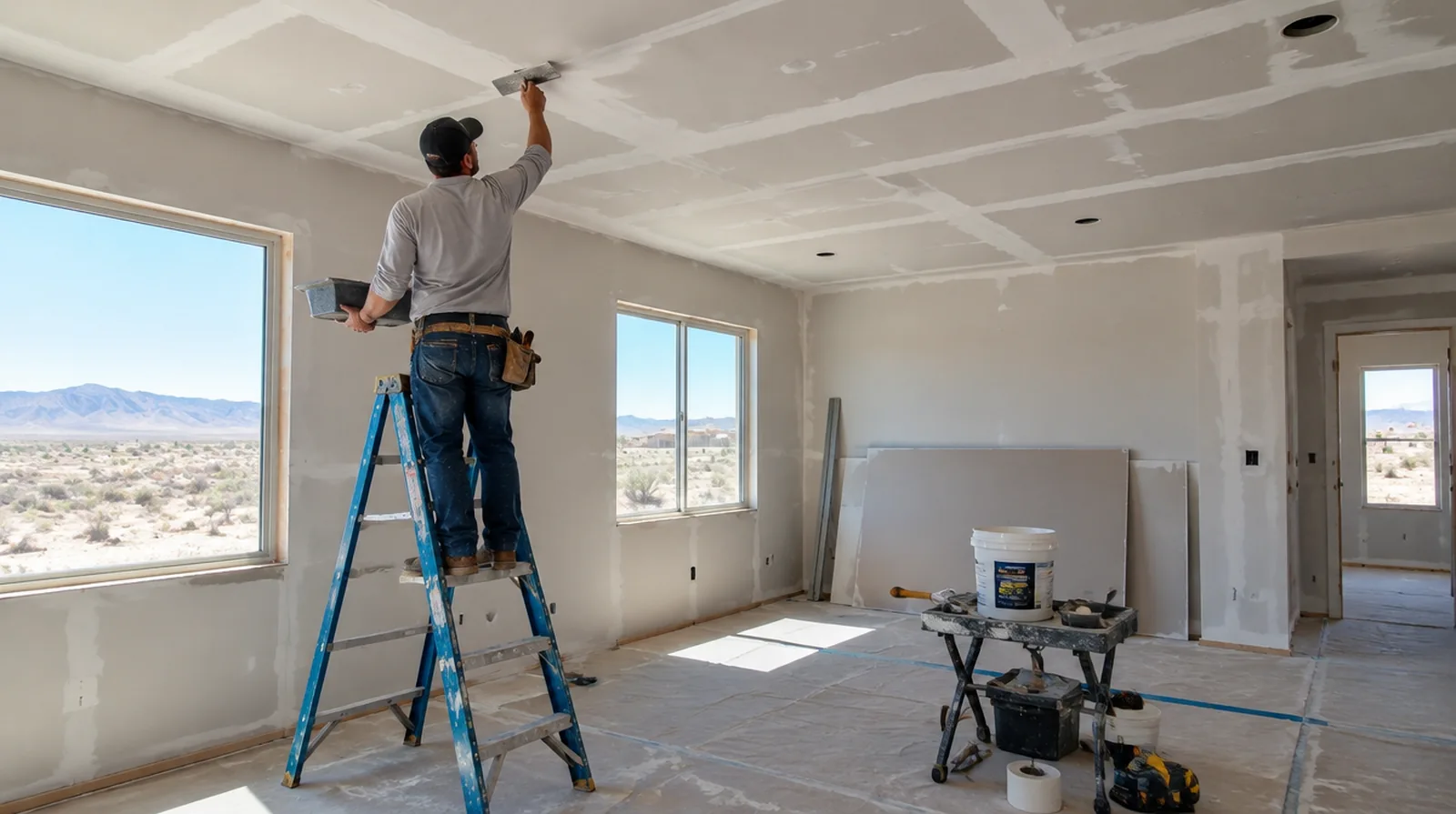
Address isolated stains
A dry repaired ceiling may still need a compatible stain blocking primer before decorative paint. Primer selection depends on the remaining discoloration and should never be used to conceal active moisture. Where a future fixture will be installed, coordinate any required backing while the cavity is accessible rather than reopening the completed wall.
Cut back to sound material
Water softened gypsum and loose edges do not provide a dependable base for a new patch. The removal boundary should reach stable material and allow the replacement to be properly supported. If the project is part of a larger remodel, settle the sequence with flooring, trim and cabinet work before setting a final finishing date.
Review the room after drying
Once the coats are dry, view the ceiling from normal room positions and near its principal windows. Identify outstanding paint preparation while protection and access are still available. Before comparing two proposals, check that both include the same protection, finishing and cleanup boundaries rather than comparing totals alone.
Set the repainting scope
Fresh paint over a local patch may contrast with a ceiling that has aged over time. A broader repaint to a logical room boundary can provide a more even decorative result. If a distinct painter completes decoration, agree the condition of the handed over surface and assign responsibility for small final corrections.
Evaluate sagging sections
A drooping panel requires an assessment of fastening, support and material condition instead of a surface skim alone. Avoid using the area beneath a potentially unstable section until it has been evaluated appropriately. If the finish paint is already chosen, share its sheen and color early because those choices influence how surface preparation is judged.
Plan overhead access
Plan suitable overhead working access around the space height and its contents. Delicate floors, bulky furniture and fittings may add more setup work than the patch dimensions suggest. Before comparing two proposals, check that both include the same protection, finishing and cleanup boundaries rather than comparing totals alone.
Add reliable backing
A ceiling patch needs fastening support on its edges rather than relying on compound to carry its weight. Fit compatible board thickness so the old and new faces meet without an unneeded step. If the problem developed after another renovation, explain which nearby materials or building systems changed before the damage became noticeable.
Identify the existing surface
A ceiling may contain gypsum board, plaster or several layers from earlier renovations. The right repair depends on that actual construction instead of the color of its painted face. Where occupants have dust sensitivity concerns, agree containment and cleaning measures before settling the way the room will be staged.
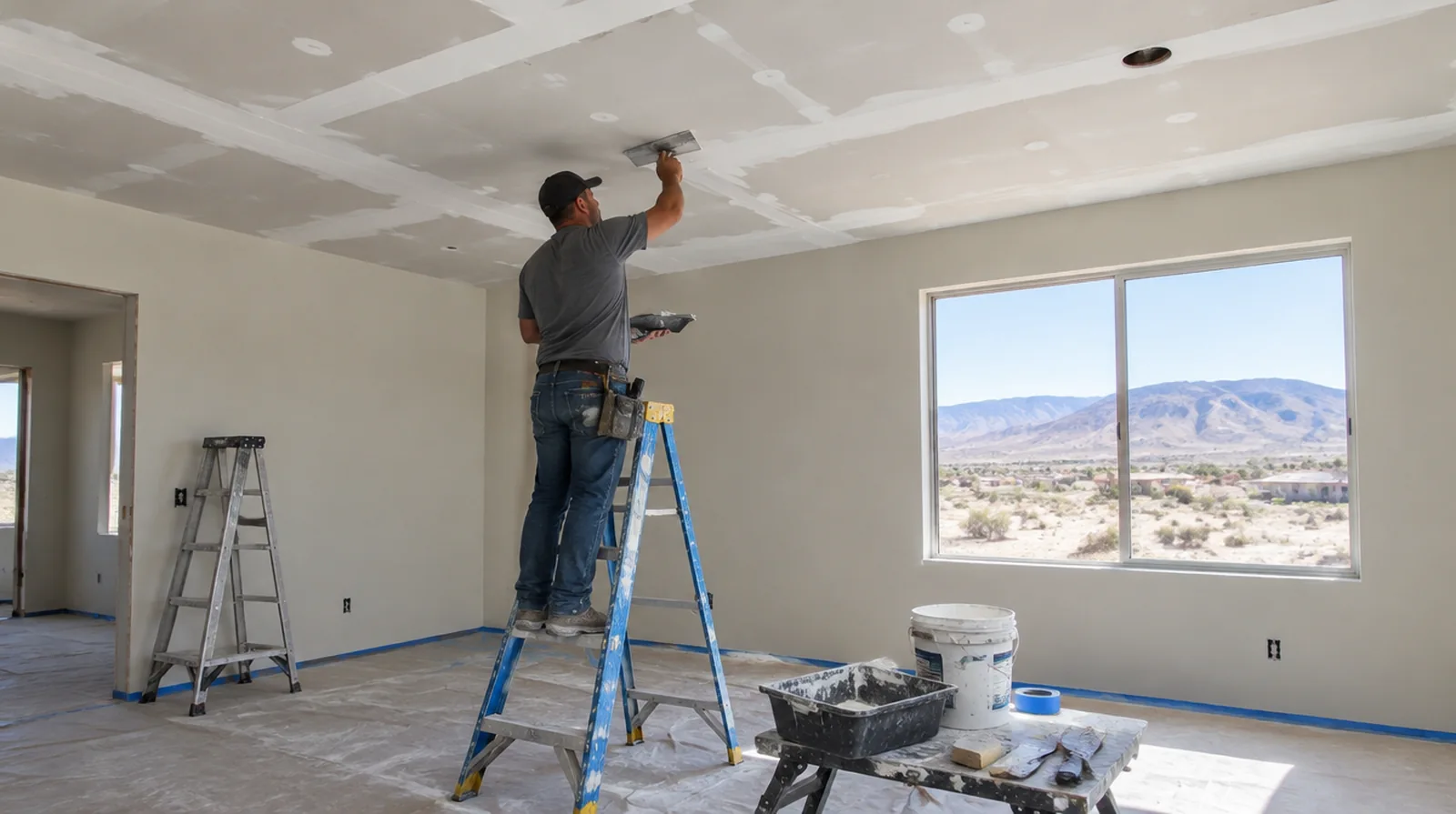
Separate fixtures from board work
Handling lights, sprinkler fittings and air grilles may require appropriate trades and building coordination. Assign removal and reinstatement responsibilities for any fitting that blocks safe repair access. At an edge beside built in furniture, state whether the obstruction will be removed or whether finishing stops at the section that can be reached.
Check the source of damage
A visible overhead mark may be evidence of a problem in a service or space above the room. Resolve the source of moisture before relying on a decorative ceiling repair to remain sound. While a removed panel exposes the wall cavity, complete the necessary review of concealed work before replacement board closes the opening.
Project context in Hesperia
Cold winter nights in Hesperia can make an unheated garage a poor place to store compound or mixed material. Many Hesperia homes carry an original builder knockdown that needs a test patch before the full repair is textured.
Scope questions before finishing
At a ceiling or wall containing fittings, assign removal and reinstatement duties for the affected devices before repair access is needed.
Where a surface has been painted many times, consider whether differences in texture or sheen will require a wider decorative treatment.
If the ceiling or wall includes fittings, identify the person responsible for removing and reinstalling each item before the work begins.
If the current finish is unusual, keep a small reference sample or a close photograph to support the discussion about blending and restoration.
When the wall has strong reflected light, look at the full plane rather than judging only the narrow strip immediately beside the patch.
When more damage could be hidden, ask how any added scope will be documented before extra material is removed or replaced.
When a wall has repeated defects, keep a record of earlier repair attempts so a new assessment does not simply repeat an unsuccessful approach.
If materials must cross common building areas, plan the protection and access route so other occupants are not needlessly obstructed by deliveries.
If scheduling is the main concern, separate hands on labor from drying intervals instead of treating every visit as a full day of active work.
For a distinctive existing pattern, retain a reference sample or detailed picture to make the matching discussion more specific.
If the completion date matters most, allow for intervals between coats as well as active labor rather than assuming the entire process happens continuously.
For a room with restricted airflow, plan drying conditions alongside dust protection and the comfort of people occupying neighboring spaces.
Explore the Hesperia drywall overview for related options, or read the project planning information before arranging the next stage.
More planning details for Hesperia
Wide Hesperia lots normally leave plenty of room to stage sheets, provided they stay flat and out of direct sun. Fine desert dust settles on fresh compound, which is why closing windows and doors during sanding matters here. Dry High Desert air shortens drying time, so thin coats and light misting help prevent shrinkage cracks.