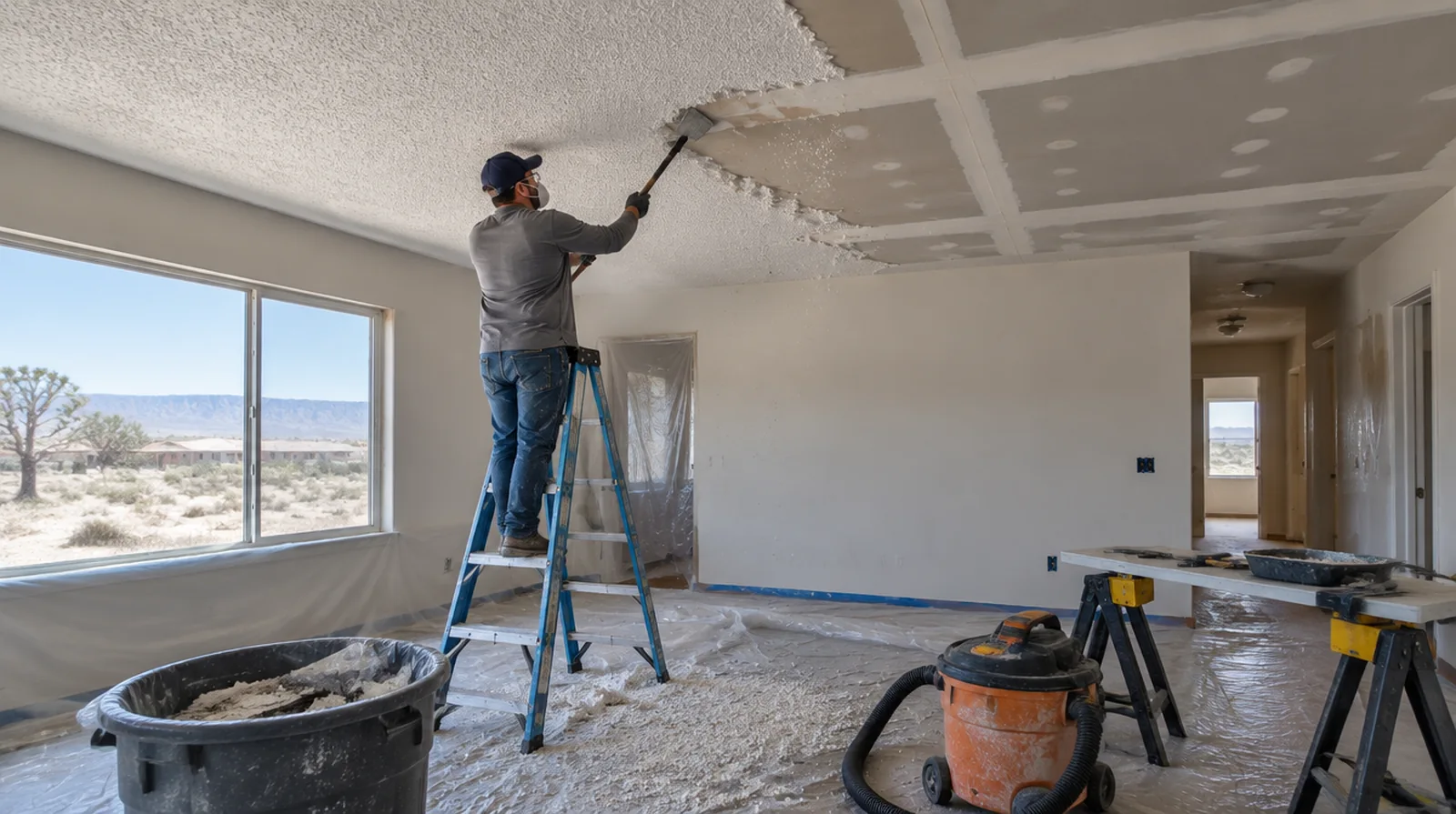
Repair exposed imperfections
Removal can uncover damaged paper or shallow defects that must be stabilized before finishing. The repair allowance ought to be discussed before the original texture is removed. In a room with little free floor space, identify temporary storage for belongings and establish adequate clearance for the work before delivery.
Choose the final surface
The intended replacement finish ought to be selected before the removal and restoration work is priced. Decide the intended appearance before pricing so the finishing work supports the right result. Where existing floors will remain, specify protective measures and review the path used by panels, equipment and finishing tools.
Account for side lighting
When heavy texture is removed, side lighting may expose imperfections previously concealed by its relief. A wider skim or more extensive finishing may be suitable for an original surface not built to remain smooth. When the project space includes a doorway, check the clearance for panel movement as well as the amount of space available for finishing tools.
Review ceiling condition
A textured ceiling can hide old repairs and seams that were never prepared for a smooth appearance. A smooth replacement finish may require additional repair after the coating has been safely removed. If the finish paint is already chosen, share its sheen and color early because those choices influence how preparation of the surface is judged.
Check for painted coatings
Paint over a textured coating may alter how readily the material releases. Assess a controlled test area so the method, labor and potential substrate repairs are understood. In a room with little free floor space, identify temporary storage for belongings and establish adequate clearance for the work before delivery.
Confirm primer and paint
Plan compatible primer and paint for the exposed ceiling once repairs and finishing are dry. Clarify whether the drywall quote stops at a paint ready finish or includes decorative coatings. Where a surface has been painted many times, consider whether differences in texture or sheen will require a wider decorative treatment.
Separate specialist work
Removal of a confirmed hazardous coating requires the relevant specialist process, not ordinary ceiling scraping. Have an appropriate professional address containment, disposal and handling before subsequent drywall finishing is arranged. If occupancy must resume on a certain day, include the later primer and paint stages in the timetable as well as drywall installation and finishing.
Plan cleanup and reopening
The room should be reviewed after debris removal and the agreed stages of finishing are complete. Allow for drying and painting time instead of assuming the space is usable immediately after scraping. For a project involving a building manager, confirm access hours and protection requirements before promising a start date or a short completion window.
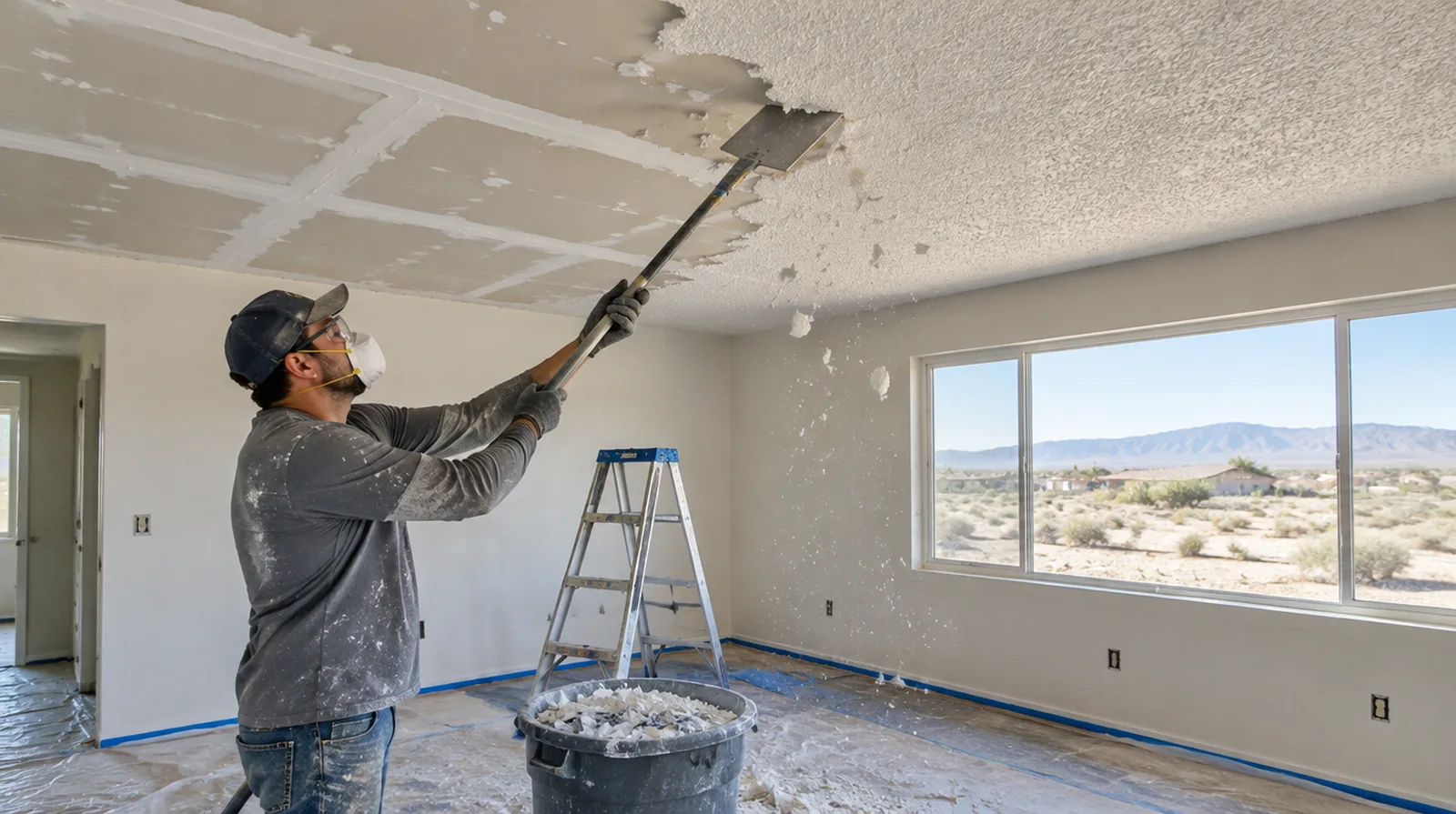
Protect the entire room
Ceiling removal creates overhead debris that can reach walls, floors and fixtures. Arrange masking, furniture relocation and a suitable removal route rather than covering only a small patch below. When a wall has repeated defects, keep a record of earlier repair attempts so a new assessment does not simply repeat an unsuccessful approach.
Plan fixture coordination
Light fittings, alarms and other ceiling devices could need separate handling by the suitable trade. Specify who will deal with lights, alarms and reinstatement instead of assuming those tasks are included. If the surface condition is uncertain, allow for an assessment that can distinguish stable material from layers that should not be covered.
Project context in Hesperia
Cold winter nights in Hesperia can make an unheated garage a poor place to store compound or mixed material. Many Hesperia homes carry an original builder knockdown that needs a test patch before the full repair is textured.
Scope questions before finishing
If a household member is sensitive to dust, discuss containment and cleaning expectations before choosing how to stage the space work.
When the same defect has returned, share information about previous repair methods so the next assessment can consider why they did not last.
If the original finish is unusual, keep a small reference sample or a close photograph to support the discussion about blending and restoration.
Where a surface has been painted many times, consider whether differences in texture or sheen will require a wider decorative treatment.
Where existing floors will remain, specify protective measures and review the path used by panels, equipment and finishing tools.
For a surface carrying numerous paint layers, discuss whether differences in the retained profile or sheen justify decorating a broader area.
At an edge beside built in furniture, state whether the obstruction will be removed or whether finishing stops at the section that can be reached.
If the proposal requires return visits, identify the purpose of each stage and the intervals during which finishing material needs to remain undisturbed.
When the history of a repair is uncertain, note when it became noticeable and whether its appearance has altered across distinct seasons.
If the project is part of a larger remodel, settle the sequence with flooring, trim and cabinet work before setting a final finishing date.
Where a finished perimeter is prominent, decide whether trim stays in position or is removed before agreeing how the new surface meets that edge.
When the decorative coating has been selected, tell the finisher its intended sheen and color while the substrate preparation standard is still being agreed.
Explore the Hesperia drywall overview for related options, or read the project planning information before arranging the next stage.
More planning details for Hesperia
A crack over a window header that reopens each summer usually points to seasonal movement rather than a failed patch. Fine desert dust settles on fresh compound, which is why closing windows and doors during sanding matters here. Hesperia rooms that face west can heat quickly in the afternoon, so finishing coats are easier to manage early in the day.